• Services
    • Vulnerability Management
    • Pentest
    • Network Pentest
    • Website Security Check
    • Phishing Campaign
    • Mystery Guest
    • Quick scan
  • NetCaptain
  • Knowledge base
  • Partners
    • MSP
  • About us
    • Contact
    • Why CyberAnt
    • News
    • Vacancies
  • Login
  • EN
    • NL
  • Menu Menu

Ransomware: Anti-virus alone is not enough
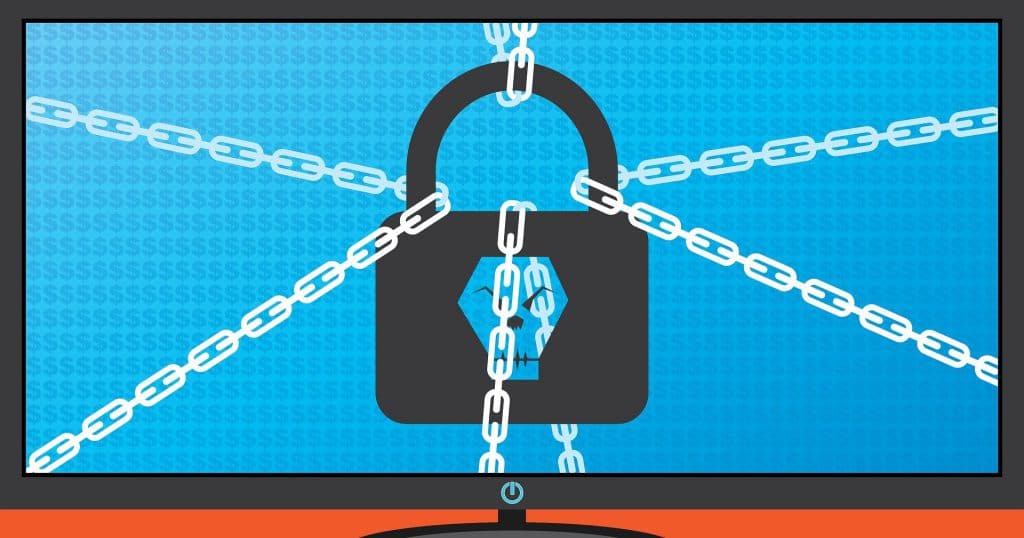
Despite the fact that almost every organization uses an antivirus product, there are many companies that fall victim to ransomware or cryptolockers.

The anatomy of an attack

If we look at today’s threats, we see that relying on antivirus and backups alone is no longer enough. Techniques to trick the virus scanner are becoming more sophisticated, making it difficult to stop ransomware. To understand how cryptolockers work (cryptolockers and ransomware are the same) it is important to know which components a cryptolocker consists of: a vulnerability, an exploit and a payload.

The vulnerability

Ransomware always uses a vulnerability to get in. There are two flavors in this: either an employee who clicks on an incorrect link, or a vulnerability in a computer system. The latter category is the most dangerous: without your having to do anything, criminals can take your entire company hostage.

Did you know that the biggest ransomware attacks in history exploited vulnerabilities in computer systems for which a solution had long been available?

The exploit

An exploit is part of the software that a hacker places to actually exploit a leak. It is a small piece of computer code that can take over the computer and sometimes even entire companies.

The payload

Once cyber criminals take control of the computer, it is time to tell the computer what to do. In the case of ransomware, all files are encrypted and spread. Sometimes this is also delayed, so that the malicious code can also nestle in the backups. But since the hacker has access, he can also use this access for corporate espionage, for example.

How can you prevent ransomware?

Now that we know how an attack works, we can use this knowledge to prevent an attack. We can do this by removing the vulnerability. This is often as simple as installing Windows Updates!

Vulnerabilities can also be introduced by problems other than outdated software, such as software misconfiguration. By implementing vulnerability management software such as NetCaptain for your ICT infrastructure, you ensure that you do not fall victim to ransomware.

Do you want to know if you are safe from ransomware? Then contact us.

Search

Search Search

Recent Posts

  • Pin or no pin: the trade-off around certificate pinning in mobile apps
  • TrapDoor supply-chain attack steals passwords from developers
  • Once again malware found in US Code Extensions
  • Large-scale attack on popular npm packages: millions of websites and apps potentially affected
  • Age verification on the Internet: what about privacy?

CyberAnt is ISO Certified

Iso gecertificeerd

Tags

.DS Store anti-virus award broken access control clickjacking Cryptographic Failures cyberaanval CyberAnt Cybercrime cybercriminelen CyberRisk Cyber Security Datalek Entity injection Etisch Hacker Hacker Insecure Design ISO 9001 ISO 27001 IT Infrastructuur beschermen malware Mass Assignment aanval NetCaptain NetCat shell upgraden Netgear ProSAFE switches nominated Open web application Security project Owasp path traversal penetration test pentest Ransomeware aanval Ransomware Responsible Disclosure secure coding Secure webshop Security Audit Security audits Security Misconfiguration Server-side request forgery (SSRF) Social Engineering SQL Injection supply chain attack vulnerability management web applicatie scanning
CyberAnt is ISO gecertificeerd

Services

  • Pentest
  • Network Pentest
  • Website Security Check
  • Phishing Campaign
  • Mystery Guest

Cyberant

  • Why CyberAnt
  • Partners
  • Knowledge base
  • News
  • About us

Contact

Marconiweg 1
3899 BR Zeewolde

info@cyberant.com
+31 (0)85 047 1590

© Copyright - CyberAnt 2024
  • Link to Facebook
  • Link to LinkedIn
  • Link to Mail
Link to: Pentest vs Vulnerability Management Link to: Pentest vs Vulnerability Management Pentest vs Vulnerability Management Link to: What is a mass-assignment attack? Link to: What is a mass-assignment attack? Mass assignment aanvalWhat is a mass-assignment attack?
Scroll to top Scroll to top Scroll to top

Deze site maakt gebruik van cookies. Door verder te surfen op de site gaat u akkoord met ons gebruik van cookies.

Accepteer instellingenVerberg de mededeling enkelInstellingen

Cookie and Privacy Settings


How we use cookies

We may request cookies to be set on your device. We use cookies to let us know when you visit our websites, how you interact with us, to enrich your user experience, and to customize your relationship with our website.

Click on the different category headings to find out more. You can also change some of your preferences. Note that blocking some types of cookies may impact your experience on our websites and the services we are able to offer.

Essential Website Cookies

These cookies are strictly necessary to provide you with services available through our website and to use some of its features.

Because these cookies are strictly necessary to deliver the website, refusing them will have impact how our site functions. You always can block or delete cookies by changing your browser settings and force blocking all cookies on this website. But this will always prompt you to accept/refuse cookies when revisiting our site.

We fully respect if you want to refuse cookies but to avoid asking you again and again kindly allow us to store a cookie for that. You are free to opt out any time or opt in for other cookies to get a better experience. If you refuse cookies we will remove all set cookies in our domain.

We provide you with a list of stored cookies on your computer in our domain so you can check what we stored. Due to security reasons we are not able to show or modify cookies from other domains. You can check these in your browser security settings.

Other external services

We also use different external services like Google Webfonts, Google Maps, and external Video providers. Since these providers may collect personal data like your IP address we allow you to block them here. Please be aware that this might heavily reduce the functionality and appearance of our site. Changes will take effect once you reload the page.

Google Webfont Settings:

Google Map Settings:

Google reCaptcha Settings:

Vimeo and Youtube video embeds:

Privacy Policy

You can read about our cookies and privacy settings in detail on our Privacy Policy Page.

Privacy statement
Accepteer instellingenVerberg de mededeling enkel